Sunday, January 18, 2015

Rent it!

My novel Quake is now exclusive to Amazon, which means you can rent it as a Prime or KU subscriber ( or you can purchase it, of course).


A deep rumble in the earth, a screeching noise, and the world begins to shake, throwing people off their feet and hurling buildings to the ground. The New Madrid Fault has ruptured again, wreaking havoc over seven states.

Gale Swanton, city planner for a small Missouri river town, is left in charge when the city manager and mayor are both killed. He struggles to help the townsfolk in the face of broken water mains and impassable roads, with little help from a FEMA overwhelmed by the vast destruction in St. Louis and Memphis.

Tempers fray as food and drinking water run low. Gale and his RN husband struggle to hold together a crumbling community and protect its citizens from their own worst instincts.

Pass the word!

Sunday, January 11, 2015

What are your favorite disaster movies?


From wikipedia
I'm a sucker for natural disaster movies, even the bad ones. I do prefer if the science is right, and I grudgingly accept "mostly right." Tell me an interesting story, with characters I like, too. Some of my favorites are:

Dante's Peak. While some portrayals of the eruption were wrong, and other bits were understandably changed for the movie (if you portrayed ash realistically, it'd be a movie with voices coming out of impenetrable gray stuff, which would be a waste of attractive actors), the special effects were way cool for the time--and they still hold up.

Supervolcano, BBC. A two-part show about a Yellowstone supereruption (which you shouldn't spend a second worrying about--you're far more likely to be eaten by a lion or killed by a cow in your lifetime). It has all the science right, it bothers to explain a good deal of it without slowing down the action, and it portrays officials as trying to do their best/their jobs, which I think is what would happen in a major disaster. I wish Hollywood usually did half so well with sticking to the facts as the British filmmakers did here.

The Great Los Angeles Earthquake. Another made-for-TV movie. Again, they have a lot of the science right. I dislike the one-dimensional bad guy character (played by "the Paper Chase guy," as we MSTies call him), but the time frame, what an earthquake is like, what can go wrong, and the aftermath is much like I'd expect it to be IRL. There'd be even more looting in an urban area, I suspect, but the confusion and horror, I believed. And remember, to relatives in the New Madrid Seismic Zone, that's what'd happen to a prepared city! If another big New Madrid quake happens (as it did in my novel Quake), you guys are in serious trouble.

Deep Impact. As with other Hollywood films, I force myself to be happy when they get half of the science right. Here, they probably didn't even hit 50% (by the time an asteroid was visible with a tiny backyard scope, everyone on the planet would know about it, and if you explode one, the mass isn't changed, so you're still going to get superheating of atmosphere, so li'l Frodo and his wife there would have been flash fried at the end, and American politicians don't get to decide what celestial objects are named--international scientists do, via well-established convention--and so on). But hey, I liked it anyway.

In my opinion, there hasn't been a great weather disaster movie yet. I wish someone would make one. There are plenty of real-life weather disasters to choose from.

And I'll add three human-caused disaster movies I like:

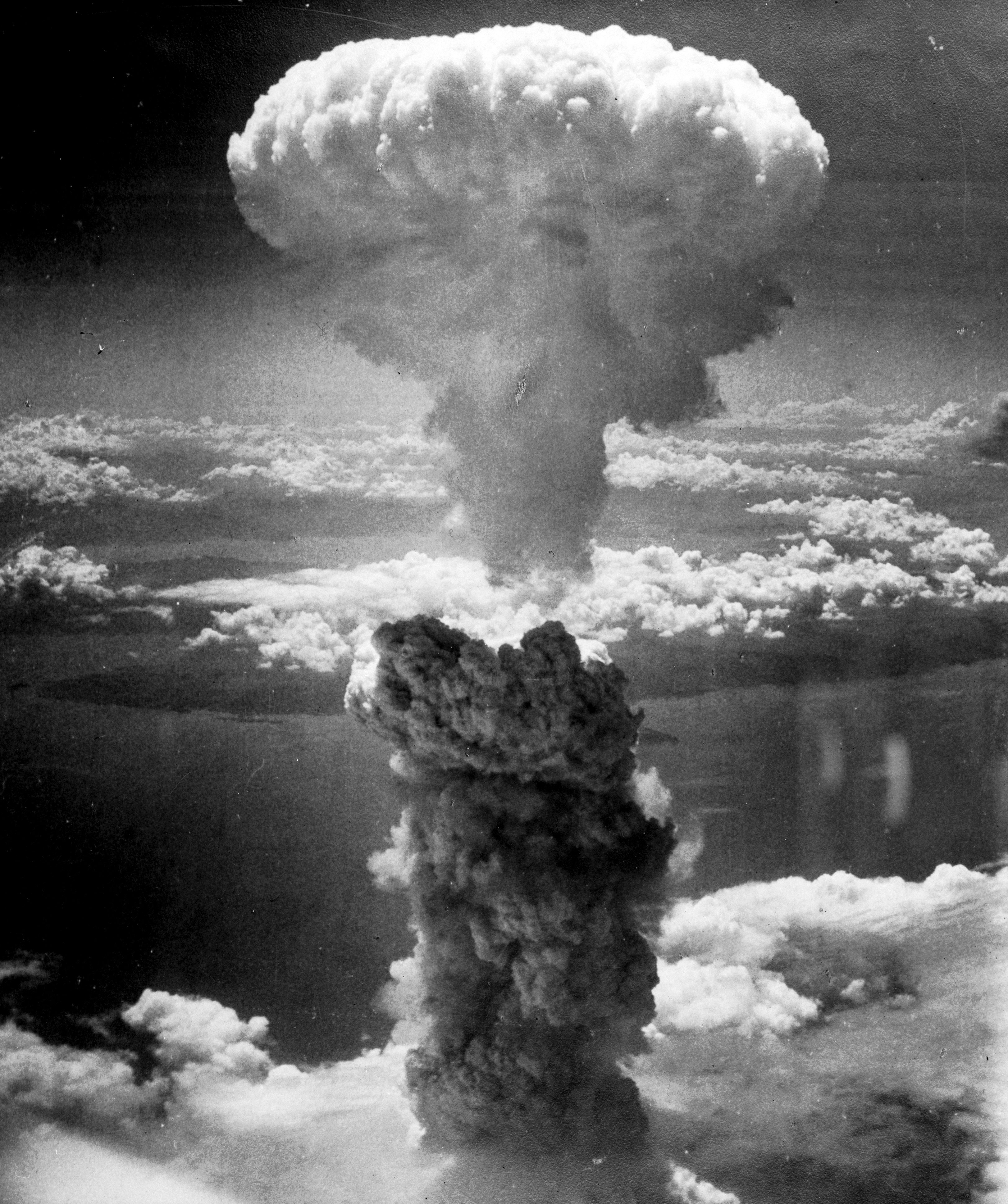
The Day After. Yet another TV movie (Made for TV movies get a bad rap--and probably deservedly so--but with disaster stories, TV seems to do better than film). Nuclear holocaust. Shocking upon first viewing, back when. Spoiler: things don't turn out very well.

Testamant. A nuclear disaster film without any explosions. Follows residents of one small town as radiation sickness takes them out one by one. Elegiac, touching, and very well acted.

Virus. (復活の日 Fukkatsu no hi) Japanese 1980 film, partly in English. Multiple disasters lead to an end-of-world scenario. Unknown/under-appreciated in the US. Find the long version, if you can.

Tell me yours! (even if it is Sharknado.)

Wednesday, January 7, 2015

#amwriting

I'm back to work (after a holiday break) on a final revision of Gray, my next natural disaster thriller. I'll be serializing what I have written, which had become too unwieldy to be one book.

I've found a spot to end the first book that should be a satisfying ending for anyone not wishing to read further in the series. Though it's full-novel length, at 55,000 words right now, I'm going to make this a 99-cent book permanently. Current projected release date is February 15.

Happy New Year to everyone.

Friday, December 26, 2014

End of the year report

Greetings, readers! I hope this new year will find you healthy and happy.

My Gothic mystery (with touches of ghosts and romance), Mists of Seacliffe, under the pen name Rosellyn Sparks, is on sale for 99 cents on January 2-5. My first readers say it's a page-turner that kept them guessing.

I'm finishing the edits on my third Lou Cadle book (Gray--look for it in February), a 99 cent book.

Since my first release at the beginning of July, I've been doing better than I expected, thanks to my readers passing the word along to friends. I reached #1 on one subgenre bestseller list for my natural-disaster novel Quake and #20 on another for my comedic adventure-romance (under the Sparks name), Treasure in the Mountain. I've sold books in eight countries. I love entertaining, so this opportunity to entertain people I've never met is a real thrill.

And none of it can be done without you. So many thanks to all of you.

I am on twitter @LouCadle and G+ and have Facebook pages for both pen names (which I confess to never checking, but you can still "like" if you wish). If you're a Goodreads member, please remember to mark my books as read (and rate them, if you are so inclined). I'd love more reviews--the most effective advertisers won't accept a book ad until there are many reviews for it on Amazon.

Thanks for reading, and let's all have the happiest year ever in 2015.

Sunday, December 14, 2014

My ten favorite books of 2014


Ten books I read in 2014 (not necessarily published this year) and would give a high rating to. I read each of these in a single day--a terrific test for me of if a book is working well.


The Thicket (Lansdale). If you don't read Lansdale, you should at least try one book, and this is a good one to start with. If you like Stephen King, you should definitely read him--not because he's usually a horror writer, but because he has a working-class-guy perspective like King's, only his prose is much better and his characterizations more layered. Landsdale might be the best mainstream American writer working today.

This historical novel, set in Texas, has elements of comedy that merge beautifully with the serious story of an orphaned kid and a rag-tag group of allies helping him find his kidnapped sister. The hog and the dwarf are terrific characters.

The Reapers are the Angels (Alden)  Literary zombie apocalypse novel, and by far the best zombie novel I've read. I usually don't like present tense narrative, and I forgave it that easily here. Lovely writing. Sympathetic main character. Beautifully sad. Usually when literary writers take a trip into genre territory, they don't succeed, but Alden does.

World of Trouble (Winters) The final in The Last Policeman trilogy, in which a giant asteroid is hurtling toward earth, and society is falling apart in anticipation of total annihilation, but one cop wants to do his job until the very end. Blending genres of apocalyptic and noir detective novels, presenting a compelling main character, relying on accurate scientific research, and offering a satisfying conclusion to the trilogy, this novel was my most anticipated novel of the year and easily  makes this list.

The Signature of All Things (Gilbert) A literary narrative of the life of an imaginary 19th Century woman botanist. Not that it influenced my rating much, but I also loved the endpaper sketches of plants and other details of book design.

The Outskirter's Secret (Kirstein) This is one of those science-fiction novels that reads like fantasy, until you start to realize that some of those magic objects are recognizable tech from our own world but sufficiently mysterious to the world's inhabitants to be confused with magic. If that can be considered a subgenre, it's one of my favorites. The hero of these stories is a Steerswoman, a peripatetic researcher/librarian. If she asks you a question, you have to tell her the truth. If you ask her a question, she must answer, sharing all human knowledge as she walks along gathering even more. Except...there are a small group of guys, called wizards, who are hoarding some knowledge and technology for themselves, and the hero is determined to solve the mystery of their knowledge. Set on an alien planet, with fascinating native flora and fauna, much of which is dangerous to humans. The standout book of a solid series.

Shine, Shine, Shine (Netzer) A novel about living life to please others but waking up to become more authentic. Mostly literary or mainstream, it has elements of science fiction. One of those books that I felt was just a step shy of great, and I was rooting for it to be great. Still, a satisfying read for a literary novel, having a strong plot (as too many litfic books do not).

The Unthinkable: Who Survies When Disaster Strikes - and Why (Ripley). Nonfiction. Were I not writing disaster novels myself, I probably never would have stumbled over this riveting book.  Ms. Ripley explains through narrative example and interviews with specialists that people variously--because of hardwiring--react to disasters differently. Some naturally lead and leap into action, and some naturally follow those leaders, and some freeze. No matter what your natural reaction, Ms. Ripley points out, being educated and trained vastly increases your chance of survival. She's an advocate for allowing people more practice than we often can have access to. It's a book you should read if you might ever be in a disaster--which means of course everyone everywhere should read it.

Aimed toward children, but impressed this adult:

Bomb: The Race to Build—and Steal—the World's Most Dangerous Weapon (Sheinkin) This non-fiction book, about exactly what the subtitle says it's about, is intended for middle school and younger high school kids, but it's terrific for adults, too. It won seven awards, and it deserved them. Action-packed narratives are thrilling to read. Nazis are working on their own bomb. Norwegian underground members are trying to destroy a German heavy water plant. There are Soviet spies in the Trinity Project, sneaking out messages. A secret training program for a few special bomber crews is underway. I've read several books on the Trinity project, two biographies of Openheimer, seen the TV documentaries on Enola Gay, and yet I was still glued to this. I think I literally bit my nails while reading it--despite knowing how, in real life, it all came out!

Me and Earl and the Dying Girl (Andrews) YA novel with a smart, socially inept male narrator and his few friends, including a girl dying of cancer. This novel seemed much more realistic than The Fault in Our Stars in how it talks about cancer's effects on teens. Despite that serious part of the story, it made me laugh aloud several times and seemed an accurate depiction of high school as I remember that torture-fest. A rare YA book for boys I can recommend without hesitation.

The Forgotten Door (Alexander) A middle-grade book from 1965 about a humanoid alien who crash-lands on Earth, gets bonked on the head in the process, and forgets important things, like how to get home. A friendly family adopts him, but everyone else is afraid of this stranger. Depicting fairly dark events for the intended age range, this one pulls no punches about prejudice, fear, and violence toward the different. As both science fiction and an allegory, it still works well today.