Some readers have asked me questions that I thought might be worth answering for everyone to see.
When is Gray III coming out?
January, and I'm 99.99% certain of that now. When I pass it to my final proofreader, I'll put a notice up here and pin a tweet on Twitter with a more specific date. The day of its release, I email my mailing list. Three days later, Amazon mails anyone who "follows" me there after asking for a message from me to include in that mail.
You're a wonderful writer. Where have you been hiding before now?
First, thank you!
I have been writing for years, but for the few years before I began self-publishing at Amazon in 2014, I was definitely feeling hidden while being given the run-around by agents. The more I read about indie publishing versus traditional, the less I was interested in traditional anyway, so I put myself on this path. (In hindsight, I should have done it three years earlier!). I focused on short stories and poetry for many years, and I only began writing novels in 2005.
Why didn't you answer my question on readersandwriters.au? You're rude!
I'm sorry I missed it. But, to be honest, I'm sure to miss more such questions as time goes on.
I appreciate your interest in my books, but if I spent two hours every day hunting every possible book discussion page or site in the fifteen countries where I currently sell books, hoping for questions directed to me (or at another pen name I use), I wouldn't be able to write new novels. There are only so many hours in my writing day, and if you like my books, then you really do want me to spend those hours writing more books, not on social media and ego-Googling.
There are two reliable ways to contact me. Here, on the contact form (or figure out my not-mysterious gmail address--(myname)@gmail.com) or via twitter @loucadle. Anywhere else? I am not likely to stumble over anything you ask me.
Do you have paperback books? I have a friend who only reads physical books.
Soon I will. Learning the two required pieces of software and the interface at CreateSpace takes time, and I've been spending my writing time on writing and required business tasks. The next few months, I've carved out time every day to peck away at learning this. If I can't gain the skills in that period, I'll pay someone to do it all. By June 2016, at the very latest, I'll have six paperback books for sale through Amazon.
I'd also like to produce audiobooks next year if I can carve out the time.
Why don't you write faster?
I appreciate the implied compliment.
If I did write faster, the books might not be as good. A typical traditionally published author puts out one book per year. I'm putting out three to four right now. It's not entirely impossible that after I work at this rate for another year, I'll be able to streamline the process and squeeze in a fifth, but it's equally possible that I'll burn out creatively, drain that mysterious well that writing comes from, and need to slow down to one a year by 2018.
Will you sell a combined bundle of the Gray series?
Yes, but not soon. I have it on my publication schedule for 2017. Often, if an author does not do this, Amazon bundles them on its own initiative.
Why did you stop selling your books at B&N?
They do nothing to promote indie books. When I switched to exclusively Amazon, I made more money in 12 hours on Kindle Unlimited borrows than I'd made on any other site in a year. More income = more freedom to write books = more books for you to read, even if you do have to download the Kindle reader app on another device.
Do you have a Kindle yourself?
I have a Fire, and I love it. Though once, early in our time together, I fell asleep on it and woke up with a black eye; but I can hardly blame the Fire for that.
banner

Showing posts with label reader questions. Show all posts
Showing posts with label reader questions. Show all posts
Sunday, December 6, 2015

Sunday, November 30, 2014
For the teenage child of a reader
My final writing post for National Novel Writing Month.
From a reader's email. "My 15-year-old wants to be a novelist. Have any suggestions?"

The best advice is what I started with: Every day, write.
From a reader's email. "My 15-year-old wants to be a novelist. Have any suggestions?"

Mostly, write, every day. But a long-term plan might be of benefit. I'll invent one, and you can adapt it for your own life.
Summer holiday from school this year, write 500 words per day, every day. If it's a great writing day, maybe you'll write 2000 words. Terrific! But if it's a bad day/you're not in the mood/something fun is happening outside the window, draw the blinds and write the 500 words anyway. Do this every day, even on the days it feels as easy as tap-dancing on a water bed. Professional writers write on the good days and difficult days, and it's a good habit to get into. Three months, 500 words a day, a few days better than 500: that's a novel draft. Don't fall into the trap of saying "I'll write one hour" as your goal. Set a word goal and write until you meet it.
Summer holiday from school this year, write 500 words per day, every day. If it's a great writing day, maybe you'll write 2000 words. Terrific! But if it's a bad day/you're not in the mood/something fun is happening outside the window, draw the blinds and write the 500 words anyway. Do this every day, even on the days it feels as easy as tap-dancing on a water bed. Professional writers write on the good days and difficult days, and it's a good habit to get into. Three months, 500 words a day, a few days better than 500: that's a novel draft. Don't fall into the trap of saying "I'll write one hour" as your goal. Set a word goal and write until you meet it.
The first half of the following school year, rewrite the
novel on weekends, and then put it aside at winter break, however far you've gone with the rewrite. Do not upload it to Amazon KDP at this point--you'll regret it if you do. You don't have nearly enough writing
experience yet to be able to produce a readable--much less a good--novel that
quickly. And experienced writers know it will take more than one revision, and perhaps years of revising, to get to the finish line.
The second half of that school year, on your weekends, plan
and research your next novel, read how-to writing articles online, and read
how-to books from the library, 808 and nearby in the Dewey Decimal system. Read
the award-winning novels from this year in your genre, too.
Hey, it's already summer again--happy times! Time, too, to draft your second novel, 500 words per day. Repeat this schedule every year
right through your university years. Do not get a writing or literature degree
at university. Get a degree that will allow you a decent-paying job. (No, this
isn't your dad writing this post, even if I sound like him right now.) Writing is unlikely to ever be a decent-paying job, and having a degree in it won't impress agents and editors.
Six years from today, if you follow this plan, you will have six novel
drafts and a university degree. Impressive! While you're job hunting (yes, you will still
need a normal job), get out your completed novels and read them in order.
Do any of the ideas still sing to you? Is one novel showing a
spark of real promise? Or was this all simply good practice, not fit for public
display? Any of these answers is fine, and even if none of those first books is
very good, you may still become a successful writer in a few years more of
study and practice. Every writer has had the experience of pulling out something they wrote a few years ago and recoiling in horror at it, so know you aren't alone in that feeling.
In addition to the practice you've put in at your craft in
these years, you've been having important life experiences. Romances, financial woes, friends dying or betraying you, and much more l will fuel your knowledge of the human experience, and some
incidents will become good fodder for future novels.
A few cautions:
Try to not need approval for every paragraph you write. It's a solitary act, writing--and that's part of its joy.
If you don't think you can take rejection and harsh critique yet, don't show your work to anyone, and particularly not to strangers online.
Keep your expectations for becoming a professional realistic (The average age of writers on the best seller lists is over 50 years old, and most of those best sellers were the the tenth--or twentieth--published book for that author.)
If you don't think you can take rejection and harsh critique yet, don't show your work to anyone, and particularly not to strangers online.
Keep your expectations for becoming a professional realistic (The average age of writers on the best seller lists is over 50 years old, and most of those best sellers were the the tenth--or twentieth--published book for that author.)
Sunday, November 23, 2014
Why natural disaster thrillers?
Continuing with my six weeks of writing posts for NaNoWriMo....From a reader's email:
Q: Why natural disaster novels? Isn't that sort of mean of
you?
A: Yes, I suppose it is. Next?
Seriously, I don't intend to be
mean, or to belittle anyone's losses during a real natural disaster. I've been
in one serious disaster, and it was mildly frightening (also, I confess, exhilarating) and
I got close to another two that were terrifying just to see from a distance. My losses were minor
in the earthquake I experienced, but I know others' were not. I really don't mean to be hurtful in choosing this topic.
 |
| All images, Wikipedia Commons |
As a writer, I like to give characters a dramatic event to
deal with to show who they truly are. We reveal our personalities in crisis. We
are changed by the frightening events of our lives, not by the predictable daily routine. In a big disaster, we come
to understand what's really important in our lives. Our mettle is tested. To
me, that makes for interesting stories.
Also, I love weather and geology. Plate tectonics is soooo
cool! When I can afford a vacation, I often visit erupting volcanoes. I watch wall-to-wall local TV coverage, online, of hurricanes. Maybe it is a
ghoulish side of me, but I'm fascinated with big destructive forces. I enjoy
being reminded how small I am in the face of this power.

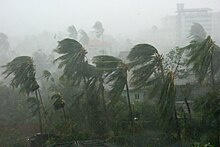
What is most frightening about real natural disasters is sometimes not the wind or the shaking but the
social decay that can surround them. Everything from price-gouging through
looting through people shooting at their rescuers: its horrifying and not at all entertaining to live through. Those are also the hardest parts of my novels to
write. I don't like thinking about people at their ugliest. I like thinking
about us at our most heroic. Natural disasters do bring out the hero in many
people...but they bring out the demon in others.
In my own small way, I also hope I can subtly encourage
disaster preparedness in readers. I'm a big fan of the CERT program--Citizen's Emergency
Response Teams--here in the US, with classes often given by your local fire
department. (I don't know, for my UK and Canadian readers, if there is an
equivalent in your countries, but a place to begin to ask would be your local fire department--and drop me a line through comments if you find that out and I'll pass it along!) I've learned through these programs and hope some of my readers do, too.


I also encourage everyone to have a disaster kit--three days
of food and water for the whole family, including pets. (I have a detailed post
about that here). Another form of preparation is knowledge. If you live in an
area that has a recurring sort of natural disaster, the more you know about it,
the better off you'll be when it comes. The people who are prepared in my
novels, like the people who are prepared in real life, fare better.
Mostly, of course I want to entertain with my books. But if I educate readers a little too, that makes me happiest.
Mostly, of course I want to entertain with my books. But if I educate readers a little too, that makes me happiest.
Sunday, November 16, 2014
Why self-publishing?
From a reader's email: Why did you choose self-publishing?
1) It's the wave of the future. Old-style publishing is
moribund. (In fact, instead of "indie" and "legacy"
publishing, I often think of them as "new" and "moribund"
publishing, mostly because it allows me to say "moribund," which is a very cool word.) Yes, the feel of a real book is nice and cozy, but with
Print on Demand, you can still have the physical book if you want.


2) Control. Authors getting published by Dell or whoever usually don't get to choose their own typeface or cover or
page layout, and often they have to rewrite their books in ways that they don't
wish to. Publishers and agents can--and do--say "it's my way or the highway." I can hire a cover artist, copy editor, designer, and typesetter of
my choice, and if I don't like one, I can move on to another.
3) There's a rich history of self-publishing. While I'm not
a radically new sort of writer, some
self-publishers have been. Walt Whitman revolutionized poetry (form and
content) with his beautiful poems. He was so "out there" for his
time, self-publishing was the only choice he had, and I'm grateful he chose it.
A world without "I Sing the Body Electric" would be an emptier world.
I'm no Whitman, but I like being in such august company.
4) Agents--that is, the pleasant absence of them. The book agent
horror stories are blood-chilling, and even if your agent does know how to read
a contract (not at all a sure bet), and even if s/he can pick out a best seller
from slush (the many success stories of books rejected by dozens of agents
suggest they are collectively not any more skilled at this than a random selection of readers might be), and even if an agent reads her
own slush (they often don't--they have 22-year-old assistants for that) she's
taking 15% of the income to be a middleman. I'm in middleman aversion therapy, so no thanks.
5) Publishers' business divisions. I feel generally positive about editors, and back when they still read their own submissions, they were encouraging to my first directly submitted novel, which I appreciated, and which told me I could probably, with a good deal of effort, win my way to traditional publication. But I'm not so confident about some other parts of those big businesses. It isn't just that I get a better royalty at Amazon (and that allows me to sell my books for affordable rates), but Amazon has a transparent contract that applies to everyone (you can go read it right now) and even I, possibly the world's worst accountant, can understand their accounting reports, which offer data delayed by no more than a couple hours and payments delayed by only a few weeks, not by years. And at any moment, I can unpublish and have all my rights back without hiring a lawyer to once again own my own books.
6) Vagaries of the marketplace. For my natural-disaster
novels, mainstream books with thriller and action components, some science, and a healthy dose
of character development, I was told by more than one agent, "No one buys
this sort of book any more. It's well-written, but I don't know how to sell
it." And it's true, there was a heyday of this sort of book in the 1970's
and there's a dearth of them now. But I like them. It's
what I wanted to write, and I wish there were more for me to read. And hundreds of lovely people are finding and buying mine, so other people must want to read them, too. (I guess readers don't read the same rules that explain what's in and out of fashion.) I'm avoiding arbitrary
fashions as decided by a handful of people in New York, and I'm pleasing some readers who also like just this sort of novel. I'm happy and I can make others happy, too, by entertaining them.
7) Ebooks are more sustainable. When you think that half of all paper books are returned and pulped, and that trees had die for
that, and our finite gasoline resources used in the shipping of the raw
materials and books back and forth, and how polluting are both ink and paper
manufacture, you can't help but think, maybe this isn't the best way to
manage the industry in the future. I love a nice musty old book, too, and I used to be a serious book collector, but even I've moved over to ebooks.
8) I'm an independent-minded cuss. There are days that I
don't play particularly well with others. And I suspect this reason matters
more than 1-7 combined
Sunday, November 2, 2014
Naming characters
Second of six in my series on writing, timed to coincide with National Novel Writing Month.
From a reader's email: How do you get your character names?
From a reader's email: How do you get your character names?
For first names, sometimes I hear a name in passing (called out over a
grocery store parking lot, for instance), and I like it and jot it down. After
I have chosen names for some characters, I use a random name generator for the
rest, and I usually have to look at 20-30 before I hit upon a first name I
like. (Before the Internet, I used a "name your baby" book.) When I
was looking for Hmong-American names, I had to do quite a bit of research to find
names that worked in both languages.
I'm not a big fan of matching name meaning to
characteristics, a la Dickens. I'd be more likely to use some ironic meaning
that did not match the character at all, but I've not done that yet, either.
And I work to make sure none of the names of main characters in a novel start
with the same first letter, so readers have an easier time of recognizing them when reading quickly.

Once I have the first names of the important characters, I
back up and look at them as a whole--does it seem like a good group of names?
Luckily, with the search and replace function, I can turn
"Steve" into "Ralph" in a split second.
Last names are even easier. If I have a polysyllabic first
name, I look for a short surname, and vice-versa. I also use this site: to find names by frequency.
Usually, I want a name around 5,000-10,000th rank in the US. There are times I
want a very common name or an uncommon name. I say the whole name aloud to make
sure it doesn't sound odd--or accidentally create a bad joke (like Hugh Jass) when said
together.
Subscribe to:
Posts (Atom)