Showing posts with label nanowrimo. Show all posts

Sunday, July 8, 2018

Camp Nano

I take part in April and July in Camp Nano, a social writing event that was created by the National Novel Writing Month (NaNoWriMo) folks. It is a chance to hang out with other writers struggling as I am, feeling the same highs of the good days when a cascade of words effortlessly flows from you (and it feels like merely through you at times), and frustrations of the days when either life intervenes and no words are possible, or the days when, despite several free hours to write, you have to squeeze each syllable out as if lancing a painful boil.

In virtual “cabins” we drop by and post, as if on any social media, and respond to other people posting. As the de facto leader of this months’ cabin, I make sure to drop by twice a day at least. (I really am not the leader in any sense but I know how to work the interface and was willing to take on the extra few hours of administrative tasks. We're equals there.)

I know writers know all this, but readers don’t, so let me describe some of what gets posted.

  • One person doubts her ability to write at all
  • Another person doubts the project she has committed to is the right project to be working on
  • Another is in love with the research but admits loves the writing less
  • To that, someone responds that they always like having written but don’t love writing
  • The next one says she loves drafting but hates rewriting
  • Someone pops in to announce that house guests have stayed two days too long and she can’t get rid of them and wants to strangle them for taking up her writing time
  • Someone writes more than that day’s goal
  • And even the people who are fighting for every word congratulate them
  • In week three, someone who has been writing effortlessly inexplicably grinds to a halt
  • Everyone sympathizes, for we have all been there.
  • Someone makes a joke about the concept of this being a summer cabin, perhaps offering to make camp stew or s’mores for everyone to cheer us up "out by the lake"
  • Two people drop out quietly, possibly because they are ashamed they aren’t meeting a goal as everyone else seems to be -- or maybe we somehow offended them, but we’ll never know
  • Someone pops in to ask a question of craft
  • Someone else asks a research question. As we’re an international cabin, sometimes we can help each other understand our language or food or other parts of our home culture.

Writing is a solitary, sometimes even lonely, occupation; as a result, I keep some social connections alive with other writers to share the joys and pains of the work.

Sunday, November 26, 2017

What is success to you as a writer?

Someone on Twitter asked this question several weeks ago, and I couldn’t answer it because my answer, I believed, was too complex for 140 characters.


The thing is, when you’ve been a writer as long as I have, you have had many goals over the years, but some of them fell away as you realized they were naive or unlikely to ever be achieved, and others fell away because you met them, and yet others fell away because you grew or changed and old goals bore you now.

So, to cite one example, a newer writer, reading the book pages in a newspaper or magazine, might think “I want to get a good review in X paper!” and much later, when he’s a professional and has access to daily sales figures and see those reviews don’t help sales one bit, and he needs sales to pay his bills because he quit his day job, he really doesn’t care one way or the other about newspaper reviews.

I once thought, I want a trade publishing deal for a novel with a big house. When I thought that at first, there was no Kindle or ebooks, there were 20 big houses, and you could contact the editors directly. Boy, those were the good old days in tradpub! I like editors. But as the industry changed, and as I had every other form of traditional/gatekeeper success a person could want, and I realized I hated the agent system, I cared less and less about this goal. It no longer was the box to check off. It was a box. It kept slipping lower and lower on my list.

And when I heard about how well people were doing in indie publishing--well, honestly, at first I couldn’t believe it, and then I did, and then I started wondering, and it began to appeal more and more. I did a lot of research about doing this in 2012 and didn’t begin until 2013. At that point, I thought, “Any stranger buying my book is a great thing.” And it happened and it was a great thing! Long term, I thought, “Okay, my eventual goal is, in three years, have six books out and be selling a hundred books per week over all titles in Year Four.”

As it turned out--and with little effort from me beyond writing--I blew that goal out of the water within a year. I had many days that I sold more than a hundred books in a day, which stunned me. I knew I was extremely fortunate. So…goal achieved, right?

And then came a strange turn, one I never expected of myself, because I’m a pretty Zen sort of person most days, and about most things, and particularly about money and possessions. In a flash, X amount of money wasn’t success enough. I wanted 2X. 3X. 5X. I met people making a million as indies! If they could, why not me? Me-me-me-me-me! Even though I couldn’t figure out how to spend 1X, to tell you the truth, I saw these magical numbers out there and suddenly lusted for them. And that was weird, to be caught up in that acquisitive “it’s never enough!” mindset. I was only caught for four or five months, but caught I was. For people who get this disease, I can’t help notice, the goal keeps receding, the goal number becomes bigger, and they drive themselves harder and yet it is never hard enough! Relationships and health suffer as they chase after that goal that, like the line of the horizon, is unreachable.

Sad. Nerve-wracking. Self-defeating. I snapped myself out of it.

But in the wake of that temporary insanity, I was left with no definition of “success” in writing that seemed meaningful to me.

I suppose my gauge of success could be graphed as a double curve, like a two-humped camel. When I was young and naïve, I dreamed of awards and recognition. Those thoughts were knocked out of me by the reality of both how hard writing is to do well and how competitive a field it is and, worst of all, that to get some awards you have to kiss a lot of butt, which is not my talent at all. For a long time after that phase had passed, I had smaller goals that I met, one after the other.

I quit dreaming. I started seeing dreaming as useless. Work is good. Work is useful. Realistic goals that you set for yourself (not the marketplace or anything outside yourself) can be worked diligently for and met. That's not success exactly; it's how I live my writing life.

Today, I suppose my definition of success is in being able to answer this question in the affirmative.

Am I Happy when I’m writing?


So maybe that would have fit in 140 characters at Twitter after all. But it has taken a lifetime to simplify my definition of success to the one-word answer to that one question.

Sunday, November 19, 2017

How one full-time writer was made

I’ve been a writer for thirty years, and a full-time writer earning my living from novels for three years.


When I began writing for publication, I was already friends with a number of mid-list genre writers, so from the beginning I understood that becoming the next Stephen King in fame or income was unlikely in the extreme, and I understood what the life of the typical paperback writer was: another day job, income from writing under $10,000/year, and needing to write evenings and weekends when you were tired from a normal job. Somehow you had to do so without making your spouse or children hate you for ignoring them several hours per week when you should have been with them instead or doing your share of the household chores. You really had to want to do it to accept those terms!

I did want it that much. I wrote, studied hard on my own, took a few courses, and in very short time was placing poetry in magazines. Not long after that, I began selling stories to national magazines. I drifted from F/SF into literary writing for a time, had several stories published of that sort, won an fellowship to an MFA program (an experience which I hated, quite frankly. MFA programs in writing definitely aren’t for a person who was raised working class, prefers reading thrillers, and thinks Salem’s Lot and Lord of the Rings are good books!)

I realized lit-fic was not my true interest, retreated from that world, gave up what position I had earned there, and went back to my genre roots as a writer, where I felt much more at home. I wrote Gray back in 2003 or 2004, when post-apocalyptic wasn’t a big genre, and several agents rejected it. Digging through the stacks of used ten cent novels at a tag sale, I found Airport and The Glass Inferno and Jaws and a few other books of that time period and fell in love with them. Why doesn’t anyone write books like that any more? I wondered.

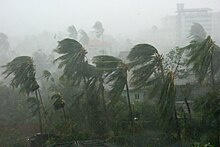
It wasn’t a huge leap from that thought to writing my own novels in that genre, mine being about natural disasters. I’m a sucker for a disaster movie. Even the worst TV disaster flicks make me happy. Show me a farm family in a tornado shelter or hurricane winds whipping the palm trees while dramatic music plays, and I want to settle in, munch popcorn, and watch until the end. I wrote the first disaster novel and started the second but again could not get most agents to even glance my way.

As no agent wanted to represent either Gray in 2004 or those books in 2012 or another book I wrote in between, indie was clearly the way to go if I wanted readers, and I did. I began the self-publishing journey in 2014, a bit late to the game, but at least I showed up! Admittedly, I made errors at first (you would not believe how difficult it is to find an excellent proofreader and a cover artist who “gets you,” and you waste a whole lot of money and patience kissing some frogs before your prince arrives), but in less than a year I had the basics down and Gray was gaining a following. (This has since swelled to over 40,000 readers for that series alone, and I am grateful for each one.)

I continued to write as I learned the ropes of indie as a business, and I’ve published most of what I’d written before and eight new novels I’ve written since entering self-publishing, including the Dawn of Mammals series, which has its own fans. I’ve unpublished a couple of pen name novels since.

I signed with an audio book publisher, and lately with a second audio book publisher, but otherwise I’m very happy with indie publishing my ebooks. I’ve been given a chance to reach the readers who agree with me about what constitutes a good story.

The only thing I don’t like about indie publishing is the self-promotion. I’d rather write, and I don’t like putting myself forward (or revealing much about myself). Because I don’t like promoting myself, I do almost none of it. People tell me I could sell four times as many books if I ran ads all the time and hired a savvy assistant to “be” me on Facebook and really work on PR over there, if I handed over the identity of my fans to Facebook as most authors do and let them pinpoint market and spam them and others who demographically match them, and pushed myself forward to be on podcasts and so on. This all sounds perfectly horrid to me, so all I do for promoting my books is this: about twice a year I run a few inexpensive ads, and I don’t even like doing that much. I’m a writer, and that’s the part I love to do. So that’s where I focus, and I trust that the rest will somehow take care of itself.

To be clear, I don’t repudiate my traditional publishing years (despite having abandoned that pen name and not being interested in going back to that world) nor do I dislike editors in the least. I always got along with editors well. There was a good deal of value to me in having to reach a certain standard of writing skill with short stories before being accepted for publication, and there was a value to competing for awards anonymously and seeing where I stacked up. It made me work harder, study harder, and up my game in order to be published in better and better magazines, and I’m glad I began my career that way.

I characterize my novels like this: I write science-based novels starring ordinary people caught in extraordinary circumstances, people with flaws and surprising resilience both. I aim to write page-turners, and when I get fan mail or reviews that say I’ve succeeded at that, I smile in contentment. If I made you stay up until the wee hours needing to know what happened next to my characters, I’ve done what I set out to do.

Wednesday, November 30, 2016

So you think you lost NaNoWriMo?

Didn't make 50,000 words? That’s fine. It doesn’t matter. I swear to you it does not matter one iota. It doesn’t make you a bad person. It doesn’t make you a loser. It doesn’t make you a hopeless writer.


One NaNo win is not the end point of your journey--not nearly so. The month of NaNo is one tool of a million tools that might help you become a selling writer one day. Just that. Nothing more. One tool.

So what if you skip it one year? So what if you “only” wrote 37000 words this year? That’s a great total! Keep writing. NaNo, remember, is just a game. You don’t want to be a game winner more than you want to be a writer, do you? So ...  go be a writer, including on December 1 and 10 and January 14.

At its best, NaNoWriMo helps people learn for the first time that it’s possible to draft a novel in a month. And then they go on and do that again, independently of any game, on months other than November, over and over again. If you wrote over 1000 words a day on average, you still learned the lesson, whether or not you hit the arbitrary 50,000 word total or not. If you wrote six days out of seven despite having a job and kids, you still did well. Keep up those good habits--write at least 1,000 or revise at least 2,000 every day--and you’ll be able to write at least two books per year. Keep doing it, year after year, and your writing will improve over the years. Keep improving, and one day strangers will be anxious to read the next book you’ve written.

If NaNo makes you feel bad, if it doesn’t match your personal production habits, don’t do it again. You’ll get beat up enough over a lifetime of writing, and a lifetime is what a writing career entails; don’t beat yourself up by adding another burden or sense of failure that you can avoid.

If you won, hey, great! Congratulations! But if you didn’t win but learned something, or wrote a third of a novel that didn’t exist in October, congratulations to you, too. You have every reason to feel proud.

Wednesday, November 23, 2016

"Why aren't my indie books selling?"

We're nearing the end of NaNoWriMo month, when I write about writing (craft and business) rather than about science, emergency preparation, and disasters.

My bad first cover for my give-away story. Don't do this in public!

I see this question asked often around the web. I'm speaking to fiction writers here, as I'm no expert on non-fiction books. None of the following answers is original to me, and most selling indie writers would offer you a list in answer that I suspect would 90% match this one.
  • you don’t have enough books out yet. Get six out there before you worry. Bonus: you’ll be a better writer by the time you’ve written your sixth
  • you’ve picked a genre that almost no one reads. Traditional publishing, with its higher profile, can afford to try to break out a new genre or promote a cross-genre book. Indies do better by sticking to established winning genres
  • you’ve picked the right genre but failed to meet its conventions. Romance, for instance, requires a happily every after; if you fail to deliver that, your books won’t sell. Or perhaps you’re trying to sell short stories in a genre that expects 100,000-word novels
  • you’re writing stand-alone books. In most genres, series sell more copies
  • your cover looks amateur (though I admit this didn’t stop me from selling books at first). Buy a pre-made cover to begin with. You can find them on sale for $15. I like goonwrite.com because he’s prolific and reasonably priced. 41 Days' cover I got from 10dollarcovers.com.When you've made your first few thousand dollars, put that back into better covers if you wish
  • your product description isn't a good, grabby selling tool
  • your “read inside” section is full of editing errors
  • you can’t write very well (yet)
  • you can write well enough, but your books are slow and bogged down with description. I know your eleventh grade teacher praised your description of a sunset, but novel readers already know what a sunset is. Type “Night fell,” and move on to action or dialog
  • you overpriced your books. No one knows who you are, so they will not pay 6.99 for your novel. Try .99 for a while
  • you aren’t releasing books quickly enough to develop a following
  • you are doing all that above right but are having rotten luck (but this is only true for 1-5% of you, so look earlier in the list for the real answer before you cling to this thought). Hang in there, keep writing, and your luck should eventually turn
In order to fix whatever is wrong, you need time and effort and a willingness to learn better. A significant percentage of people slapping books up on Amazon are doing just that--slapping up a half-baked book. That won’t result in success. First, learn to write well. (Hint: if it’s your first book ever, you probably haven’t yet.) Second, pay or barter for proofreading.

Third, look at the best sellers in your subgenre and see what those authors are doing with covers and product descriptions. Then buy a similar pre-made cover and write your blurb in a similar style.

Fourth, now that the problem is fixed, ignore that book and write your next book and your next. A writing career spans a lifetime, so get on with yours.

I guarantee you that here is NOT what’s wrong: you don’t have enough reviews/you haven’t run enough ads. Forget about that stuff until you have a completed series out or your first six books. By then, reviews will have likely taken care of themselves anyway. And by then, you’ll have likely read sufficient articles and forum posts by successful indies to know the very few sites where it’s worth advertising.

I wish you the best in your journey as an author-publisher.


Sunday, November 20, 2016

I do believe in luck

During National Novel Writing Month (NaNoWriMo), I post about writing issues, craft and business, rather than my typical posting on science, natural disasters, and emergency preparation.

I believe that luck plays a part in commercial writing success. Many other writers--some making a good living and others with brilliant plans laid out which they are certain will catapult them to fame any day now--do not, and I understand why. So let me explain why I do.
my guess at what contributes to writers' success
I don’t think writing success is only about luck, mind you, nor primarily about luck. And today is perhaps the first time in history that you can succeed without connections; sales and ranking are no longer about whether or not some New Yorker wearing shoes more expensive than your entire wardrobe bopped you on the head with the fairy godmother wand or not, thank the great demigod Jeff Bezos.

So there is good news: what you do alone at the keyboard matters much more today than it has ever mattered before. With self-publishing, the relationship between hard work and success is getting cozier, and that’s one hell of a comfort to those of us who work hard.

I also know this: wishing won’t manufacture luck. Only hard work will. There’s a famous quote out there (quoteinvestigator.com tried to figure out who said it first and that’s so complicated, I won’t even try to attribute it): “The harder I work, the luckier I get.” Believe it.

Still... I have witnessed three writers, just as skilled as one another, working just as hard in the same genre, coming up with varied incomes. One is making $250K/year, and one $72K and a third not quite $20K. Even with the same number of books out, about the same number of years in the business, and the same number of releases this year, their results vary. So, to my mind, this suggests that there must be some luck involved. Start comparing writers across genres, and you can find even more wildly disparate results. Hard work in writing (or in sculpting, acting, or playing in a rock band) does not necessarily win you a living wage. Chances are, because of how many people are vying for the top spots, you won’t grab one.

Nor does success last year mean you are guaranteed it again next year. A lot of skilled, hardworking people in the arts have a five- or ten-year reign at their top level, and then it slips away despite their best efforts. They were good, yes, and they still are...but their luck turns. The moving finger writes, and having writ, moves on.

Without hard work, you can’t position yourself to get lucky. Don’t do the work, and you’ll certainly fail. Do the work and get a dose of luck, and you might soon be paying the bills with your writing.

So do I believe that hard work is required to succeed? Absolutely. But do I also believe there’s such a thing as luck for writers? I do. This does not excuse me or you from doing our work. If we want to make a living as novelists, we can’t do it by dawdling around online during our writing hours or practicing the award acceptance speech in the mirror or making excuses or feeling jealous and resentful of people who work harder than we do. As I have often reminded myself: Quit yer daydreaming, quit yer whining, and write today’s words.

Then do it tomorrow and for all the tomorrows to come. If you don’t, you’ll never get lucky.

Sunday, November 13, 2016

I don't believe in talent

During National Novel Writing Month (NaNoWriMo), I post about writing issues, rather than my typical posting on science, natural disasters, and emergency preparation.

“You're so talented as a writer.”


I hear this from time to time in emails, and before you think this is just bragging and quit reading this article before this sentence ends, let me assure you, I am NOT talented.

And neither is any other novelist.

That's because writing isn't a talent. Language is learned. Writing skill is learned. No two-year-old child sits down and pens a perfectly structured screenplay or novel, proving to me it’s not an innate skill. In the past five years there have been a number of articles and books written on the concept of how much work it takes to get to achieve competence in a field. There's the 10,000 rule, popularized by Malcolm Gladwell . There's Ericsson’s concept of deliberate practice and his book, Peak, which also debunks the concept of “innate talent.” Before that, SF writer David Gerrold reminded us that it takes a million words of practicing fiction writing before we'll write a novel anyone will want to read.

A lot of people think they want to write a book, but they don't understand that they'll probably have to write three to five bad ones (or a hundred bad short stories) before they can write a decent one, and three decent ones before they write a good one. It takes years of work to achieve skill, and some of those years are frustrating. Few people seem to be able to stick through them.

I don't know why I was, why I was willing to sink 25,000 hours into learning the craft and the business when it rewarded me hardly at all, before indie publishing and my lovely readers gave me the chance to be a full-time writer. Beyond having parents who worked hard at jobs and community service and provided excellent role models without ever lecturing us on the topic, I believe that people like me are congenitally stubborn. We don't quit because we're a little mad. We bang our heads against the brick wall until we see cracks in the mortar. Or we just bang our heads until we die.

Before 10,000 hours was a catchphrase and before Ericsson’s research, in 1989 western novelist Jack Bickham wrote, “Talent is something people attribute to a successful person after years of hard, hidden, agonizing work.” Amen to that.

So thank you for the “talent” compliment, and I'm not a complete ingrate; I did take it how you intended it. But I hope you forgive me if I correct you: if you like my novels: I’m not talented. Talent would be a fairy godmother hitting me on the head with a wand. Skill is earned. I put in my hours, and if I have any skill to speak of, effort built it.

And this is good news to beginning writers struggling to figure out how to make it all come together. It means with enough effort, you can become skilled, too.

Wednesday, November 9, 2016

Writers, consider the source

A vast community of online writers now exists, with many people giving advice to other writers for free, sometimes when asked, sometimes just blurting it out on forum or blog. ;)  Some of the advice-givers have even written how-to books about craft or business and put them on Amazon for 2.99, and despite all the good free advice out there, lots of people buy those books.

Whenever you read advice from a writer, before you begin to believe it, do this for yourself: CHECK THE AUTHOR'S BOOK RANKINGS AT AMAZON. If you are published, indie or traditionally, and they have a book or two ranked higher than you, sure, give the advice some consideration and decide if it sounds like a fit for you. If they are ranked lower than you, or if they are ranked (as is shockingly common), lower than 300,000 at Amazon's book store, you can safely ignore that advice. To be blunt, if the advice was good, they'd have more readers.

Subject me to this test, too. Either my proof is in my pudding, or it ain't. (This year, I'm mostly talking about me rather than giving direct advice, but if you see implied advice in my posts, it counts.) My newest book's link is always next to the top "gadget" in the right-hand column of my blog. Usually, though not always, an author's newest book is his top ranked book.

And for heaven's sake, don't buy some book or service from the advice-giver unless he's a top seller! That's being the "sucker born every minute." And none of us wants to be that.

Sunday, November 6, 2016

Writing a million words of fiction in 2016

During National Novel Writing Month (NaNoWriMo), I post about writing issues, rather than my typical posting on science, natural disasters, and emergency preparation.

One million new words of fiction per year?

I know there are a few people out there who write a million new words of fiction a year, but I worked my hardest in 2016 and discovered that I’m not going to be one of them.


I’ve navel-gazed about the question of whether or not I was just being whiny (something 99% of writers are tremendously skilled at, so I try to monitor myself for this), but I don’t think I am this time. People who write a million a year generally:

  1. Write every day or nearly so
  2. Sometimes dictate into Dragon Naturally Speaking
  3. Often write in a genre where there’s a formula, and they stick to it with each book
  4. Hire out all editing and proofreading
  5. Are capable of revising Book A in the afternoons while writing the first draft of Book B in the mornings
But...
  1. I do write every day or nearly so, though I have a limit of three hours of creative work. After that, my creative brain just shuts off, and I seem capable of writing only the equivalent of “uhhhhhhhhhhhhhhhhhh.” If I push it past four hours, I get a headache and might lose the following day to that. After this many years at it, periodically pushing myself for more production, I’m fairly certain this is a real limit of my imperfect brain.
  2. I’ve tried dictation, and even after training the VR program for weeks, it still introduced 70 new typos into every 1000 words, and about once every 1000 words I couldn’t even discern what I had meant, it had typed something so far away from what I’d said. As proofreading is difficult to trade for and/or expensive from a pro, I had to say “no, thanks,” as it seemed to me that I’d only bought myself more unpleasant hours of proofreading work later on.
  3. Every one of my stand-alone novels is a new creature altogether, and even the three novels of the Gray series are very much different from one another. I’ve tried coming up with a reusable outline, but it’s impossible for me and my genres. The best I can do for myself is a twelve point plan, but it’s vague and it doesn’t get me very far. (One bullet point is “a reversal,” as an example. Not a whole lot of help.) 
  4. I have proofreaders lined up, some volunteer and some paid, but I would feel bad about turning it over to them without doing any revision or proofing myself first. I have tried to talk myself into a lazier mindset, but I. Just. Can’t. It’s a mental quirk, I suppose, wanting to do the best work I can manage on my own, and I’m stuck with it. The most I’ve been able to do in this realm is write an editing macro for myself to speed up revision and trade in my former three revisions for the macro plus one this year. (Mumbling “the perfect is the enemy of the good” the whole while to force myself to not obsessively rewrite.)
  5. The eight-hour work day, divided into new words in the morning and revising/proofing a different novel in the afternoon, is something I tried, but it didn’t work for me. Seven days a week, eight hours a day of writing/revising work is exhausting, and then there’s a business to run, too. It’s also confusing to me to jump back and forth between projects every day.

And so I now work for my three hours every morning, but it is either new words or revision or proofreading, not all three. I also do an hour or two of business work daily: mailing list, blog, emails, social media, accounting, etc. And every day includes a couple hours of research/non-fiction reading for the next book in line. Seven hours a day, seven days a week, and very few days off: 49 hours of work per week. It’ll just have to do.

Because the other thing I fear million-word writers must do can be seen by looking at it through the lens of David Sedaris’s “four burners theory.” A friend of his says there are four burners in a life: work, friends, family, and health. Unlike on a stove, where you can crank them all up to high for a long while, in real life, you cannot. If you turn work up to high, friends, family, and health will suffer. To be really successful, she said, you have to turn off two burners.

I think she has a point. For any one person, there is no such thing as infinite time. Or infinite energy. Or an infinite number of days functioning on three hours sleep. We have limits, and if we don’t respect them--if we don’t keep an eye on all four burners--we might find ourselves with fifteen novels written this year, but have no friends, high blood pressure, and are being served with divorce papers or bailing a kid out of jail because he acted out just to get our attention for a few minutes.

I tried as hard as I can, and I turned friend and health burners down too low, but I don’t think I’ll quite crest a half-million new words by December 31. (If I get to count blog posts, yes, I will). Other people can write a million, and my hat is off to them. I did my best, yet I found I am not in that group.

Next year, I’ll aim for about 333,000 new words...and I will reconnect with some friends whose invitations I turned down too often in 2016.


Sunday, October 30, 2016

Planning to participate in NaNoWriMo?

I have a totally unscientific WAG based on thirty years of watching people be writers, want to be writers, and fail to be writers about attrition and success in writing. Here it is, expressed graphically.

Be one of the rare ones! Finish a novel this November.

Sunday, November 22, 2015

Writers: whose craft do you admire?

Writers--no matter how skilled and successful they are now--are always trying to improve. They also love reading and, if you get them onto the topic, they can talk for hours about whose technique they admire. I asked a handful of my fellow authors this question:

What's a specific piece of the fiction-writing craft at which you can see another author doing well, and that you would like to imitate or perfect for your own writing?

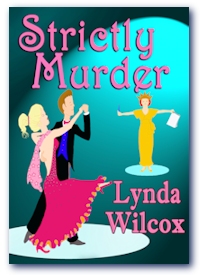
Lynda Wilcox, writer of mysteries and children's books, said:


Writing traditional British whodunits, I yearn for the day when I can emulate my heroine, the great Agatha Christie, at writing pithy character description. While I would struggle with eye and hair colour, height, weight, and apparel, Mrs Christie disdains them all and gives us a vivid picture of the Countess Vera Rossakoff in one wonderful sentence:

"Without the least warning the door flew open and a whirlwind in human form invaded our privacy, bringing with her a swirl of sables (it was as cold as only an English June day can be) and a hat rampant with slaughtered ospreys."

www.lyndawilcox.com/ 


Amelia Smith, fantasy and historical fiction writer, cites complexity of plot as something she admires.
The example that jumped out at me was Connie Willis's two-book series, Blackout and All Clear. The books are about history students from the future who go back to WW II London and try to do their research without disrupting the time line... mostly. She weaves together multiple narratives and story lines so well, complete with jumps in time. I wish I could put together such a complex story so effectively.
http://ameliasmith.net/


Amy Corwin, author of historical romances and mysteries says,
Most of my novels include a mystery of some sort, even if it is a simplistic one. Author Christopher Fowler has really perfected mysteries with unusual events, strange historic details, and complex plots that seem to take crazy, unrelated clues and make them all mesh into a brilliant conclusion. I’m always working to make my mysteries richer and more complex, and I don’t know if I’ll ever reach the pinnacle Fowler has reached with his Bryant and May mysteries, but I certainly hope to give him a run for his money!"
http://www.amycorwin.com 


Writer of gay shifter romances Shelley Grayson says:
I struggle with setting and trying to create the right atmosphere for a scene, because it's easier for me to focus on dialogue and what's in a character's head. Both Stephen King and Robert McCammon are masters at grounding a scene in ordinary but specific details, so when the werewolves or killer clowns show up, the readers are hooked and willing to go along with it. I often reread passages from their books to absorb how they've done it and try to find a better balance in my own stories.
shelleygrayson.com


Romance writer Jessa Jacobs told me:
The areas I feel I could most improve at the moment would be humor and poetry of language. Selecting just the right combination of words to evoke an exact emotion in the reader is an exercise in patience, but I'm always working on it. Thinking back to the last book that absolutely shattered me, not only for the story but because I utterly despair of writing that well, I came up with author Jodi Picoult as someone to study.
www.jessajacobs.com 


Fantasy writer Daniel Marvello has been impressed with a recent read:
Chasing Arizona by Ken Lamberton is similar in some ways to Bill Bryson's work (although not quite as humorous), and chronicles Lamberton's "year-long joyride through Arizona." Lamberton's book captivated me immediately due to the author's skilled use of language and, in particular, his powerful command of verbs. As a result, his words paint incredibly vivid images on the canvas of your mind. I'm not exaggerating when I say that some passages nearly brought tears to my eyes because they were so skillfully rendered.

Lamberton has already started influencing my own writing. I'm consciously trying to do better about using verbs in place of nouns and adjectives coupled with forms of "to be." The technique increases the sense of immediacy and movement and should improve the pace and clarity of my writing.
http://www.danielrmarvello.com/


New writer of comedies and romances Victoria Leybourne says:
My heart belongs to the humorous writing styles of Terry Pratchett, Douglas Adams and PG Wodehouse. With those guys, every paragraph - if not every sentence - is a neat, unpretentious little parcel of joy. They're consistently laugh-out-loud funny without appearing to really work at it. That's the dream for me!
http://oppositeofpopular.com


Thank you to all of them for participating in this, the last of my posts this year on the writing craft, honoring NaNoWriMo.

Support indie authors and check out these writers' books at Amazon or your favorite e-book retailer. And jump in below, in comments, with your own answer to my question.

Sunday, November 8, 2015

Is NaNoWriMo for you?

This post, of my series honoring NaNoWriMo, will talk (oddly enough) about risks to the writer of NaNo. I hope to encourage people who are just now starting to think that NaNo might not be working out for them that it's perfectly okay to think that. It doesn't make you a bad person or a bad writer to realize it's not for you. This won't, in other words, be the typical rah-rah, get-back-to-it blog post you might read elsewhere this week.
Wikimedia commons image + modification

National Novel Writing Month was a creation of Chris Baty, by all accounts a nice guy, from the San Francisco area. The goal is, commit to writing 50,000 first-draft words between November 1 and November 30. If you do that, you "win."

Tens of thousands of amateurs from around the world try to write their first novel and discover how difficult that is and give up, which to me seems an excellent result, even if it doesn't feel excellent to those people at the time. Learning something new about the world and yourself is never a bad thing, and learning how difficult writing a novel is might make you a more appreciative reader. It might not be a NaNo "win," but it's a personal win.

Other drafts from NaNo novels go on to be darned good books. Water for Elephants was a NaNo novel, as well as The Forest of Hands and Teeth, The Night Circus, and probably hundreds of good indie novels that I can't name.

But let's be clear: it is not a wonderful experience for everyone who tries it. There are problems and pitfalls for both the amateur and professional writer.

For some first-timers, they cannot meet the goals and end up with confidence shaken, feeling miserable, depressed, and convinced they aren't and never will be writers. I wish they wouldn't feel that way (for all the good that wishing will do them). 500 words a day, on average, still will get you a novel draft in five months. Some people simply write best at that slower pace. Others have three kids and a full-time job, gutters to clean and snow to shovel, and the 40 minutes they carve out of every day to write 500 words is all they can spare. There's no shame in this (or shouldn't be), yet trying and failing to keep up with the NaNo pace does sometimes make people feel ashamed. It may even lose us some writers who would have gone on to write lovely books at a slower pace. That makes me sad. 1667 words per day is an arbitrary number. If you discover it's not your magical number, that's perfectly fine.

The NaNo system assumes that every writer would do best by quick-drafting, not editing or researching as he goes, and cleaning up a mess of a short draft only through multiple revisions later. But that's not every writer's ideal process. Some people do rewrite as they go. Some edit yesterday's words to start every new writing day. Back in the days of typewriters, several authors claimed not to take a page out of the machine until it was correct and final. Personally, I need to research as I go, in order for the scenes to form clearly in my mind's eye, and you may need to as well.

A newer writer, not yet knowing her own best patterns and habits, seeing that some people on the NaNo forums are claiming to write 250,000 words this month and 50,000 on day one, feeling peer pressure, might see anything less than 50,000 words in a month as a failure. And that's just silly. 35,000 words in a month is great! Do it again next month, and you have a complete novel draft--and possibly one closer to finished than the one you might have written by pushing for 50,000 in one month.

I suspect that most of the first novels written during NaNo are pretty far from done. If what is produced in a month of writing isn't at all good, if in fact it needs to be scrapped entirely, is there still any value to having written it? Yes. It teaches the value of self-discipline. For people who stick to the routine and write nearly every one of the 30 days, even the ones where they felt like doing anything else instead, they've learned what they'll need to be doing to become a professional writer. They've begun to establish good habits, and if they keep up those good habits, they've solidly placed themselves on the road to success.

For the already professional writer

Not every participant in NaNo in November has professional aspirations--at least not that they'll admit to. If they do, though, let's be frank: one month per year of work isn't going to do much for them. The exhaustion that most "winners" feel at the end of November is the exhaustion I have felt for the 17 of the 18 months I've been self-published, and most of my self-published friends feel the same--there's a steady, tough workload of writing/revising/proofing plus a list of non-writing chores that has the magical ability to grow by two every time you check off one.

A writing career is not one book, and one book published a year creates enough income to pay all the bills for only a few hundred lucky writers. In the world of indie writing, the common belief (and there is strong evidence that this is true) is that we must have four releases per year, most of those new novels, in order to earn a living wage. One rough draft in November is perhaps 1/24th of the work you'd need to hit this ideal self-publishing number. 50K in 30 days is good...but it may not be enough.

The professional might also find a problem with the rigidity of the attitudes at NaNo. You must begin on November 1. You must wait until then. Look, a writer is lucky if he has 25 good novels in him. Over a lifetime, you might lose some of those. A life crisis in the middle of one can derail it forever. Another may never come together as you'd like, no matter how many revisions you give it, eating up a couple years of effort for no measurable return. A third and fourth might be lost to a bad situation--loss of editor or merger or bankruptcy--in traditional publishing. A fifth you might throw away by stopping in the middle to do something else and never being able to regain the right mental state. So you're going to write only 20 of these good novels to completion. I recently saw a NaNo official tell someone who was excited to begin his novel the last week of October not to, because it was "against the rules." He wasn't looking to report the words as November words. He was just excited to start. I wanted to tear my hair out at this terrible, terrible advice. Worst advice ever!

Do you have professional aspirations? Then if you are desperate to begin on October 20, start the damned novel! Please! Inspiration and excitement are like free money lying on the street for a writer. If you don't grab it now, a brisk wind will come and snatch it away. Much of writing is hard. Not every day is a happy day. Pros show up and pound out their minimum words despite bad moods and the urge to do something--anything!--other than write. (Upon revision, you can't tell the good days' from the bad days' words, so you learn that "write anyway" is a most valuable lesson.) On those days when you are burning to write and can pound out 5,000 words without breaking a sweat? Do. Not. Give. Those. Up. Certainly don't give them up because it's freakin' October the 20th! Ack!

The point of NaNo for pros (or those aspiring to be professionals) is that it is--or should be--used in service of your writing career. Use NaNo if you like, but don't let it use you, or limit you, or toss you off your game. Get a solid eight hours sleep October 31. Get up and write (as you always do) your best number of words, whether that is 1000 or 3000 or 5000. If you already know you need one day each week away from your writing to feel your best, continue to take it off during November. If you're finishing a project you started in October and only have 40,000 words to finish, just finish the damned novel and forget about "winning" NaNo. If your outline is only half-baked on November 1, fully bake the thing and start the novel on November 15 instead.

For the professional writer, a NaNo win is a little like your award for perfect attendance in fourth grade that you threw away long before you went to university. Sure, it gave you a glow of pride for a moment when you were nine years old, but as an adult you realize that it has zero actual value.

A finished novel has value. But for some people, NaNo doesn't make getting to one easier.

Do understand: I like NaNo. It works for me this year. But I keep it in perspective. I was a traditionally-published writer before Chris Baty has his interesting idea in 1999. You could be a happy writer or a best-seller without ever having heard of it. It's just ... one thing. A game. A diversion. A chance to hang out with other writers. If it's painful or damaging for you, take care of your writer self and drop out without a gram of guilt or shame.

May my fellow writers out there all write novels to be proud of, this year and every year, any time they feel the urge.

Sunday, November 1, 2015

My favorite books on the craft of writing

(In November, in honor of National Novel Writing Month, I blog about the craft of writing, as I seldom do the rest of the year. I hope you enjoy these posts.)

There are a number of books that, over the years, helped me learn to be a better fiction writer. Here are some of them.


Gary Provost, Make Every Word Count. There is perhaps no better book for the new fiction writer than this, and it applies to narrative non-fiction and article writing, too! Provost corrects many of the most common line-level errors that new writers make. He explains why to avoid said bookisms. He explains why active verbs are better than passive. He tells you to "Avoid cliches like the plague." All of this is done in a friendly, humorous style in short chapters. Sadly, Provost died young, but his advice is timeless.

Because many high school and college teachers assigned it, there are many copies used for a penny plus shipping at Amazon. If you're writing your first novel or series of short stories, get it!

Jack Bickham. Writing Novels That Sell. Bickham repeated much of the information in this book in several others, but I will always be fond of this one for its first chapter that demythologizes writing and always pumps me up to read. (To summarize. It's work. If you want to make a living at it, get down to work and quit yer whining.)

The best bits of it are Bickham's summary of his mentor, Dwight Swain's, concept of scene and sequel and motivation-reaction units. Surely some people are naturals at this sort of thing, but the analytical approach could make any writer understand how to make the scenes flow well and logically and to draw the reader inexorably forward.

Much of the information on the business end--typed manuscripts and so on--is well out of date, and who is left alive who remembers QB Slingin' Sammy Baugh on the field?, but the content is golden.

Dwight Swain. Techniques of the Selling Writer. After reading Bickham, I wanted to read the original, and I began my hunt for this book. At that time, it was out of print, and I finally happened upon it at a used book store while I was on the road. Yay!

If the Bickham is dated, this one is positively antediluvian. Confession magazines, action pulps, Colliers--all are fading now in the memories of the last elderly people to have seen them. And he has a charming belief that only women write confessions and romance and only men write action, but of course he was a product of his time (and there's not a drop of viciousness in him about this. Pretend he's your kindly grandpa and listen to his wisdom).

Here it all is in the original, MRUs, scene and sequel, in many more words. I prefer Bickham's briefer approach, but you have to give credit where it is due, and Swain is the originator. It's back in print now and easy to find.

My only living author in this list (and he's no spring chicken) is Robert McKee, the screenwriting instructor, for his Story: Style, Structure, Substance, and the Principles of Screenwriting. To me, structure is both the most important part of a novel and the hardest to learn to craft. Someone led me to this not many years ago and I was shocked to find that it's screenwriters who really understand story structure, and yet in a way novelists can adapt and use.

Blake Snyder's Save the Cat is a rung on the ladder less than Story, I think, but it still had some useful advice for me and it influenced the structure of Gray II. Snyder also died young.

I've read two hundred more craft books than these over many years, and most had one bit in them I found useful. I am not one for "you go, girl!" type books or books that have you find your mystical inner child writer or half-autobiographical books. I prefer specific advice that you can immediately take action on to improve your novels and stories, and these five books are, imo, top examples of those sorts of books.

Sunday, November 30, 2014

For the teenage child of a reader

My final writing post for National Novel Writing Month.

From a reader's email. "My 15-year-old wants to be a novelist. Have any suggestions?"


Mostly, write, every day. But a long-term plan might be of benefit. I'll invent one, and you can adapt it for your own life.

Summer holiday from school this year, write 500 words per day, every day. If it's a great writing day, maybe you'll write 2000 words. Terrific! But if it's a bad day/you're not in the mood/something fun is happening outside the window, draw the blinds and write the 500 words anyway. Do this every day, even on the days it feels as easy as tap-dancing on a water bed. Professional writers write on the good days and difficult days, and it's a good habit to get into. Three months, 500 words a day, a few days better than 500: that's a novel draft. Don't fall into the trap of saying "I'll write one hour" as your goal. Set a word goal and write until you meet it.

The first half of the following school year, rewrite the novel on weekends, and then put it aside at winter break, however far you've gone with the rewrite. Do not upload it to Amazon KDP at this point--you'll regret it if you do. You don't have nearly enough writing experience yet to be able to produce a readable--much less a good--novel that quickly. And experienced writers know it will take more than one revision, and perhaps years of revising, to get to the finish line.

The second half of that school year, on your weekends, plan and research your next novel, read how-to writing articles online, and read how-to books from the library, 808 and nearby in the Dewey Decimal system. Read the award-winning novels from this year in your genre, too.

Hey, it's already summer again--happy times! Time, too, to draft your second novel, 500 words per day. Repeat this schedule every year right through your university years. Do not get a writing or literature degree at university. Get a degree that will allow you a decent-paying job. (No, this isn't your dad writing this post, even if I sound like him right now.) Writing is unlikely to ever be a decent-paying job, and having a degree in it won't impress agents and editors.

Six years from today, if you follow this plan, you will have six novel drafts and a university degree. Impressive! While you're job hunting (yes, you will still need a normal job), get out your completed novels and read them in order. Do any of the ideas still sing to you? Is one novel showing a spark of real promise? Or was this all simply good practice, not fit for public display? Any of these answers is fine, and even if none of those first books is very good, you may still become a successful writer in a few years more of study and practice. Every writer has had the experience of pulling out something they wrote a few years ago and recoiling in horror at it, so know you aren't alone in that feeling.

In addition to the practice you've put in at your craft in these years, you've been having important life experiences. Romances, financial woes, friends dying or betraying you, and much more l will fuel your knowledge of the human experience, and some incidents will become good fodder for future novels.

A few cautions:

Try to not need approval for every paragraph you write. It's a solitary act, writing--and that's part of its joy.

If you don't think you can take rejection and harsh critique yet, don't show your work to anyone, and particularly not to strangers online. 

Keep your expectations for becoming a professional realistic (The average age of writers on the best seller lists is over 50 years old, and most of those best sellers were the the tenth--or twentieth--published book for that author.)

The best advice is what I started with: Every day, write.

Sunday, November 23, 2014

Why natural disaster thrillers?


Continuing with my six weeks of writing posts for NaNoWriMo....From a reader's email:

Q: Why natural disaster novels? Isn't that sort of mean of you?

A: Yes, I suppose it is. Next?

Seriously, I don't intend to be mean, or to belittle anyone's losses during a real natural disaster. I've been in one serious disaster, and it was mildly frightening (also, I confess, exhilarating) and I got close to another two that were terrifying just to see from a distance. My losses were minor in the earthquake I experienced, but I know others' were not. I really don't mean to be hurtful in choosing this topic.

All images, Wikipedia Commons

As a writer, I like to give characters a dramatic event to deal with to show who they truly are. We reveal our personalities in crisis. We are changed by the frightening events of our lives, not by the predictable daily routine. In a big disaster, we come to understand what's really important in our lives. Our mettle is tested. To me, that makes for interesting stories.

Also, I love weather and geology. Plate tectonics is soooo cool! When I can afford a vacation, I often visit erupting volcanoes. I watch wall-to-wall local TV coverage, online, of hurricanes. Maybe it is a ghoulish side of me, but I'm fascinated with big destructive forces. I enjoy being reminded how small I am in the face of this power.


What is most frightening about real natural disasters is sometimes not the wind or the shaking but the social decay that can surround them. Everything from price-gouging through looting through people shooting at their rescuers: its horrifying and not at all entertaining to live through. Those are also the hardest parts of my novels to write. I don't like thinking about people at their ugliest. I like thinking about us at our most heroic. Natural disasters do bring out the hero in many people...but they bring out the demon in others.

In my own small way, I also hope I can subtly encourage disaster preparedness in readers. I'm a big fan of the CERT program--Citizen's Emergency Response Teams--here in the US, with classes often given by your local fire department. (I don't know, for my UK and Canadian readers, if there is an equivalent in your countries, but a place to begin to ask would be your local fire department--and drop me a line through comments if you find that out and I'll pass it along!) I've learned through these programs and hope some of my readers do, too.


I also encourage everyone to have a disaster kit--three days of food and water for the whole family, including pets. (I have a detailed post about that here). Another form of preparation is knowledge. If you live in an area that has a recurring sort of natural disaster, the more you know about it, the better off you'll be when it comes. The people who are prepared in my novels, like the people who are prepared in real life, fare better.

Mostly, of course I want to entertain with my books. But if I educate readers a little too, that makes me happiest.

Friday, November 21, 2014

NaNoWriMo

The newest novel (Tornado--still not 100% sure of the title) still needs a week of work to call it a completed first draft, but I've "validated" at the official website and now can claim the right to post this little image.

It was fun to interact with writers again every day, and I'll miss that part of it. I may just join the editing/revision thread that happens on the official website when I begin to revise, for the last time, Gray (my next release) because I like the daily check-in.Writing is a solitary endeavor, and it's somehow reassuring to touch base with others battling the same challenges.

In other news, thank you to everyone who bought my novels in November. My fifth month of self-publishing was my best. At one point I was about the 30,000th top-selling writer at Amazon, which was fun to see. I'm so glad people I've never met are reading and enjoying my books. That's so much nicer than having ten books sitting on the hard drive without any friends. I appreciate every one of my readers, including my new German reader, whoever you are!


Thursday, November 13, 2014

Sunday, November 9, 2014

Ten rules for being a writer

I'm not much for rules--certainly not in this case. So here are ten suggestions I've given in the writing classroom (in days of yore) for becoming a professional fiction writer:


1) Write every day, except when you're in surgery or labor or a coma. Set a daily quota--250 words, 500 words, 1667 words, 8,000 words, a scene, a handwritten page, or whatever fits your life and writing rhythms, but set it and keep to it until you've drafted a novel. After a draft is completed, take a break of whatever length you need (most people take at least a month, to gain some distance--you can write on another project during that month or do business). Next set a daily quota for revising that book. Then, after revising, you can take another break for your creative well to refill and, when it has, you draft the next book. (If you're one of those "I only need one day to jump back in" people, I envy you. If you, like me, need some weeks to recover, that's fine, too. We all have our own rhythms.)

2) Read books on craft. Writing is a craft. Talent is not some magical spell taking root in your brain without effort, or inborn like your eye color, but is you learning skills, practicing skills, and getting steadily better. Magical granting of talent may sound like more fun, but here in the real world, good writers work to get better. Particularly early in your writing life, how-to books will shorten your apprenticeship. Years after my first pro publication, I read Story (McKee) and I still learned something.

3) Read good fiction--the award winners in every genre, the popular books in your genre of 25 years ago and 10 years ago and today, and everything by the writers you love to read.

4) Analyze your favorite books for their craft. Count words in sentences in slow scenes and actions scenes and compare. Circle verbs or characterization by description or whatever you'd like to learn how to do better. Highlight action, introspection, and dialog in different colors. Study these mark-ups and come to conclusions about craft from them. Figure out exactly how that book became your favorite, and take those lessons back to your own writing.

5) At some point in your writing life, not when you're new, not when you're consistently being published, but in between those two points, critique other writers' works, in a real-life local group, or online if you can't find a face-to-face group in your area. You'll probably learn more from detecting others' mistakes and figuring out how to fix them than you will from listening to critiques of your own work. (And don't worry if the other writer doesn't take your advice; the point was to learn for yourself how to detect and fix those mistakes in your own work, after all.)  Switch groups every couple years, too, for the friendships that develop will make the critiques less honest. (Keep the friends, but switch groups.)

6) Don't write to be rich (chances of that happening are little better than winning the lottery). Don't chase publishing fads. Don't write to impress your professors. Write what you honestly like to read, what you can write with joy on a daily basis over many years, and have faith that your audience will find you one day.

7) A good style is one that makes you invisible, not one that draws attention to you.

8) Accept that it may take, as Gerrold says, a million words of practice writing to write a good novel. I hope it takes less, but if that's what it takes, you're not abnormal. Learning to write is, in this sense, much like learning to play the violin. You're not going to be the soloist at the Big City Philharmonic after one or even five years of practicing your fiddle. Be patient, and do your work.

9) Protect your love of writing. If you always end up broken-hearted after talking to X person about writing, or after logging 100 agent rejections, or after reading your one-star reviews on Amazon, quit putting yourself in the way of that pain. As the old joke says, "Doc, it hurts when I do this." "Then don't do that."

10) Read advice like this list if you like, but take all advice with a grain of salt. All writers give such advice out of their own experiences, or out of that of their close writing friends. Your experience may end up being nothing like mine.

Good luck!

Tuesday, November 4, 2014

Tornado thriller progress

I'm drafting the next natural disaster novel, this one with tornadoes, during National Novel Writing Month (quite an international event, despite the name). I've crested 10,000 words, and it's really starting to feel alive to me. Three of the characters have achieved that feeling of independence that writers know so well--they seem to write "their own" dialog. I know that, in reality, it's me doing the work, but the me who is me and the me who is them have become different people, with different personalities, different ways of speaking, and different reactions. We share my head for a month. They seem to dictate many of the words, and I just type as fast as I can to get them down. It's a lovely feeling, when it's working well.


I've been researching tornadoes off and on for several months, and as I do that, possible characters start to form in my head, and the research suggests plot events. At the same time, I've taken a specific sort of student out of my teaching past, a line recorded by Connie Fletcher in one of her non-fiction books on cops that I read a very long time ago, my experience with a sick neighbor today and one many years ago, and added all that to the characters. It's like...the slowest of slow cookers, putting all the ingredients in over many years, increasing the rate of addition over the last weeks, and then you eventually you open it up and realize you have a pretty tasty meal to present to guests. Or it's a bit like planting bulbs. You put in fertilizer, bulbs, and almost forget about them, and then in the spring you have pretty flowers. Now's the bouquet-making moment, and luckily, you know how to arrange flowers because you've been studying the art for long years. Neither of those metaphors is exact, I know, but it's as close as I can come to explaining the process.

By the end of the month (barring difficulties), I'll have a new novel draft. After setting it aside to revise and proofread a completed Lou Cadle novel (Gray) and a Rosellyn Sparks novel (Nellie), and quite possibly draft yet another novel, I'll have gained important distance and return to revise this one with a cool editor's eye. Look for it at Amazon, iTunes, Nook, and elsewhere in early summer, 2015.

Sunday, November 2, 2014

Naming characters


Second of six in my series on writing, timed to coincide with National Novel Writing Month.

From a reader's email:  How do you get your character names?

For first names, sometimes I hear a name in passing (called out over a grocery store parking lot, for instance), and I like it and jot it down. After I have chosen names for some characters, I use a random name generator for the rest, and I usually have to look at 20-30 before I hit upon a first name I like. (Before the Internet, I used a "name your baby" book.) When I was looking for Hmong-American names, I had to do quite a bit of research to find names that worked in both languages.

I'm not a big fan of matching name meaning to characteristics, a la Dickens. I'd be more likely to use some ironic meaning that did not match the character at all, but I've not done that yet, either. And I work to make sure none of the names of main characters in a novel start with the same first letter, so readers have an easier time of recognizing them when reading quickly.


Once I have the first names of the important characters, I back up and look at them as a whole--does it seem like a good group of names? Luckily, with the search and replace function, I can turn "Steve" into "Ralph" in a split second.

Last names are even easier. If I have a polysyllabic first name, I look for a short surname, and vice-versa. I also use this site: to find names by frequency. Usually, I want a name around 5,000-10,000th rank in the US. There are times I want a very common name or an uncommon name. I say the whole name aloud to make sure it doesn't sound odd--or accidentally create a bad joke (like Hugh Jass) when said together.

As I seldom refer to the surname of characters, I'm not as worried about choosing a "wrong" one. And if I make a truly bad guy, like an ax-murderer of children, I do an Internet search for the full name, making sure I'm not naming some awful character after a real person--or at least a real person with an Internet presence. I might accidentally still do that, but I'd rather avoid it if I can.