Greetings, readers! I hope this new year will find you healthy and happy.
My Gothic mystery (with touches of ghosts and romance), Mists of Seacliffe, under the pen name Rosellyn Sparks, is on sale for 99 cents on January 2-5. My first readers say it's a page-turner that kept them guessing.
I'm finishing the edits on my third Lou Cadle book (Gray--look for it in February), a 99 cent book.
Since my first release at the beginning of July, I've been doing better than I expected, thanks to my readers passing the word along to friends. I reached #1 on one subgenre bestseller list for my natural-disaster novel Quake and #20 on another for my comedic adventure-romance (under the Sparks name), Treasure in the Mountain. I've sold books in eight countries. I love entertaining, so this opportunity to entertain people I've never met is a real thrill.
And none of it can be done without you. So many thanks to all of you.
I am on twitter @LouCadle and G+ and have Facebook pages for both pen names (which I confess to never checking, but you can still "like" if you wish). If you're a Goodreads member, please remember to mark my books as read (and rate them, if you are so inclined). I'd love more reviews--the most effective advertisers won't accept a book ad until there are many reviews for it on Amazon.
Thanks for reading, and let's all have the happiest year ever in 2015.
banner

Friday, December 26, 2014

Sunday, December 14, 2014
My ten favorite books of 2014
Ten books I read in 2014 (not necessarily published this
year) and would give a high rating to. I read each of these in a single day--a
terrific test for me of if a book is working well.

The Thicket (Lansdale). If you don't read Lansdale, you should at least try one book, and this is a good one to start with. If you like Stephen King, you should definitely read him--not because he's usually a horror writer, but because he has a working-class-guy perspective like King's, only his prose is much better and his characterizations more layered. Landsdale might be the best mainstream American writer working today.
This historical novel, set in Texas, has elements of comedy that
merge beautifully with the serious story of an orphaned kid and a rag-tag group
of allies helping him find his kidnapped sister. The hog and the dwarf are
terrific characters.
The Reapers are the Angels (Alden) Literary zombie apocalypse novel, and by far
the best zombie novel I've read. I usually don't like present tense narrative,
and I forgave it that easily here. Lovely writing. Sympathetic main character.
Beautifully sad. Usually when literary writers take a trip into genre
territory, they don't succeed, but Alden does.
World of Trouble (Winters) The final in The Last Policeman trilogy, in which a giant asteroid is hurtling toward earth, and society is falling apart in anticipation of total annihilation, but one cop wants to do his job until the very end. Blending genres of apocalyptic and noir detective novels, presenting a compelling main character, relying on accurate scientific research, and offering a satisfying conclusion to the trilogy, this novel was my most anticipated novel of the year and easily makes this list.
The Signature of All Things (Gilbert) A literary narrative of the life of an imaginary 19th Century woman botanist. Not that it influenced my rating much, but I also loved the endpaper sketches of plants and other details of book design.
The Outskirter's Secret (Kirstein) This is one of those science-fiction novels that reads like fantasy, until you start to realize that some of those magic objects are recognizable tech from our own world but sufficiently mysterious to the world's inhabitants to be confused with magic. If that can be considered a subgenre, it's one of my favorites. The hero of these stories is a Steerswoman, a peripatetic researcher/librarian. If she asks you a question, you have to tell her the truth. If you ask her a question, she must answer, sharing all human knowledge as she walks along gathering even more. Except...there are a small group of guys, called wizards, who are hoarding some knowledge and technology for themselves, and the hero is determined to solve the mystery of their knowledge. Set on an alien planet, with fascinating native flora and fauna, much of which is dangerous to humans. The standout book of a solid series.
Shine, Shine, Shine (Netzer) A novel about living
life to please others but waking up to become more authentic. Mostly literary
or mainstream, it has elements of science fiction. One of those books that I
felt was just a step shy of great, and I was rooting for it to be great. Still,
a satisfying read for a literary novel, having a strong plot (as too many
litfic books do not).
The Unthinkable: Who Survies When Disaster Strikes - and
Why (Ripley). Nonfiction. Were I not writing disaster novels myself, I
probably never would have stumbled over this riveting book. Ms. Ripley explains through narrative
example and interviews with specialists that people variously--because of
hardwiring--react to disasters differently. Some naturally lead and leap into
action, and some naturally follow those leaders, and some freeze. No matter
what your natural reaction, Ms. Ripley points out, being educated and trained
vastly increases your chance of survival. She's an advocate for allowing people
more practice than we often can have access to. It's a book you should read if
you might ever be in a disaster--which means of course everyone everywhere
should read it.
Aimed toward children, but impressed this adult:
Bomb: The Race to Build—and Steal—the World's Most Dangerous Weapon (Sheinkin) This non-fiction book, about exactly what the subtitle says it's about, is intended for middle school and younger high school kids, but it's terrific for adults, too. It won seven awards, and it deserved them. Action-packed narratives are thrilling to read. Nazis are working on their own bomb. Norwegian underground members are trying to destroy a German heavy water plant. There are Soviet spies in the Trinity Project, sneaking out messages. A secret training program for a few special bomber crews is underway. I've read several books on the Trinity project, two biographies of Openheimer, seen the TV documentaries on Enola Gay, and yet I was still glued to this. I think I literally bit my nails while reading it--despite knowing how, in real life, it all came out!
Me and Earl and the Dying Girl (Andrews) YA novel with a smart, socially inept male narrator and his few friends, including a girl dying of cancer. This novel seemed much more realistic than The Fault in Our Stars in how it talks about cancer's effects on teens. Despite that serious part of the story, it made me laugh aloud several times and seemed an accurate depiction of high school as I remember that torture-fest. A rare YA book for boys I can recommend without hesitation.
The Forgotten Door (Alexander) A middle-grade book from 1965 about a humanoid alien who crash-lands on Earth, gets bonked on the head in the process, and forgets important things, like how to get home. A friendly family adopts him, but everyone else is afraid of this stranger. Depicting fairly dark events for the intended age range, this one pulls no punches about prejudice, fear, and violence toward the different. As both science fiction and an allegory, it still works well today.
Sunday, November 30, 2014
For the teenage child of a reader
My final writing post for National Novel Writing Month.
From a reader's email. "My 15-year-old wants to be a novelist. Have any suggestions?"

The best advice is what I started with: Every day, write.
From a reader's email. "My 15-year-old wants to be a novelist. Have any suggestions?"

Mostly, write, every day. But a long-term plan might be of benefit. I'll invent one, and you can adapt it for your own life.
Summer holiday from school this year, write 500 words per day, every day. If it's a great writing day, maybe you'll write 2000 words. Terrific! But if it's a bad day/you're not in the mood/something fun is happening outside the window, draw the blinds and write the 500 words anyway. Do this every day, even on the days it feels as easy as tap-dancing on a water bed. Professional writers write on the good days and difficult days, and it's a good habit to get into. Three months, 500 words a day, a few days better than 500: that's a novel draft. Don't fall into the trap of saying "I'll write one hour" as your goal. Set a word goal and write until you meet it.
Summer holiday from school this year, write 500 words per day, every day. If it's a great writing day, maybe you'll write 2000 words. Terrific! But if it's a bad day/you're not in the mood/something fun is happening outside the window, draw the blinds and write the 500 words anyway. Do this every day, even on the days it feels as easy as tap-dancing on a water bed. Professional writers write on the good days and difficult days, and it's a good habit to get into. Three months, 500 words a day, a few days better than 500: that's a novel draft. Don't fall into the trap of saying "I'll write one hour" as your goal. Set a word goal and write until you meet it.
The first half of the following school year, rewrite the
novel on weekends, and then put it aside at winter break, however far you've gone with the rewrite. Do not upload it to Amazon KDP at this point--you'll regret it if you do. You don't have nearly enough writing
experience yet to be able to produce a readable--much less a good--novel that
quickly. And experienced writers know it will take more than one revision, and perhaps years of revising, to get to the finish line.
The second half of that school year, on your weekends, plan
and research your next novel, read how-to writing articles online, and read
how-to books from the library, 808 and nearby in the Dewey Decimal system. Read
the award-winning novels from this year in your genre, too.
Hey, it's already summer again--happy times! Time, too, to draft your second novel, 500 words per day. Repeat this schedule every year
right through your university years. Do not get a writing or literature degree
at university. Get a degree that will allow you a decent-paying job. (No, this
isn't your dad writing this post, even if I sound like him right now.) Writing is unlikely to ever be a decent-paying job, and having a degree in it won't impress agents and editors.
Six years from today, if you follow this plan, you will have six novel
drafts and a university degree. Impressive! While you're job hunting (yes, you will still
need a normal job), get out your completed novels and read them in order.
Do any of the ideas still sing to you? Is one novel showing a
spark of real promise? Or was this all simply good practice, not fit for public
display? Any of these answers is fine, and even if none of those first books is
very good, you may still become a successful writer in a few years more of
study and practice. Every writer has had the experience of pulling out something they wrote a few years ago and recoiling in horror at it, so know you aren't alone in that feeling.
In addition to the practice you've put in at your craft in
these years, you've been having important life experiences. Romances, financial woes, friends dying or betraying you, and much more l will fuel your knowledge of the human experience, and some
incidents will become good fodder for future novels.
A few cautions:
Try to not need approval for every paragraph you write. It's a solitary act, writing--and that's part of its joy.
If you don't think you can take rejection and harsh critique yet, don't show your work to anyone, and particularly not to strangers online.
Keep your expectations for becoming a professional realistic (The average age of writers on the best seller lists is over 50 years old, and most of those best sellers were the the tenth--or twentieth--published book for that author.)
If you don't think you can take rejection and harsh critique yet, don't show your work to anyone, and particularly not to strangers online.
Keep your expectations for becoming a professional realistic (The average age of writers on the best seller lists is over 50 years old, and most of those best sellers were the the tenth--or twentieth--published book for that author.)
Sunday, November 23, 2014
Why natural disaster thrillers?
Continuing with my six weeks of writing posts for NaNoWriMo....From a reader's email:
Q: Why natural disaster novels? Isn't that sort of mean of
you?
A: Yes, I suppose it is. Next?
Seriously, I don't intend to be
mean, or to belittle anyone's losses during a real natural disaster. I've been
in one serious disaster, and it was mildly frightening (also, I confess, exhilarating) and
I got close to another two that were terrifying just to see from a distance. My losses were minor
in the earthquake I experienced, but I know others' were not. I really don't mean to be hurtful in choosing this topic.
 |
| All images, Wikipedia Commons |
As a writer, I like to give characters a dramatic event to
deal with to show who they truly are. We reveal our personalities in crisis. We
are changed by the frightening events of our lives, not by the predictable daily routine. In a big disaster, we come
to understand what's really important in our lives. Our mettle is tested. To
me, that makes for interesting stories.
Also, I love weather and geology. Plate tectonics is soooo
cool! When I can afford a vacation, I often visit erupting volcanoes. I watch wall-to-wall local TV coverage, online, of hurricanes. Maybe it is a
ghoulish side of me, but I'm fascinated with big destructive forces. I enjoy
being reminded how small I am in the face of this power.

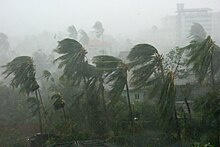
What is most frightening about real natural disasters is sometimes not the wind or the shaking but the
social decay that can surround them. Everything from price-gouging through
looting through people shooting at their rescuers: its horrifying and not at all entertaining to live through. Those are also the hardest parts of my novels to
write. I don't like thinking about people at their ugliest. I like thinking
about us at our most heroic. Natural disasters do bring out the hero in many
people...but they bring out the demon in others.
In my own small way, I also hope I can subtly encourage
disaster preparedness in readers. I'm a big fan of the CERT program--Citizen's Emergency
Response Teams--here in the US, with classes often given by your local fire
department. (I don't know, for my UK and Canadian readers, if there is an
equivalent in your countries, but a place to begin to ask would be your local fire department--and drop me a line through comments if you find that out and I'll pass it along!) I've learned through these programs and hope some of my readers do, too.


I also encourage everyone to have a disaster kit--three days
of food and water for the whole family, including pets. (I have a detailed post
about that here). Another form of preparation is knowledge. If you live in an
area that has a recurring sort of natural disaster, the more you know about it,
the better off you'll be when it comes. The people who are prepared in my
novels, like the people who are prepared in real life, fare better.
Mostly, of course I want to entertain with my books. But if I educate readers a little too, that makes me happiest.
Mostly, of course I want to entertain with my books. But if I educate readers a little too, that makes me happiest.
Friday, November 21, 2014
NaNoWriMo
The newest novel (Tornado--still not 100% sure of the title) still needs a week of work to call it a completed first draft, but I've "validated" at the official website and now can claim the right to post this little image.

It was fun to interact with writers again every day, and I'll miss that part of it. I may just join the editing/revision thread that happens on the official website when I begin to revise, for the last time, Gray (my next release) because I like the daily check-in.Writing is a solitary endeavor, and it's somehow reassuring to touch base with others battling the same challenges.
In other news, thank you to everyone who bought my novels in November. My fifth month of self-publishing was my best. At one point I was about the 30,000th top-selling writer at Amazon, which was fun to see. I'm so glad people I've never met are reading and enjoying my books. That's so much nicer than having ten books sitting on the hard drive without any friends. I appreciate every one of my readers, including my new German reader, whoever you are!
It was fun to interact with writers again every day, and I'll miss that part of it. I may just join the editing/revision thread that happens on the official website when I begin to revise, for the last time, Gray (my next release) because I like the daily check-in.Writing is a solitary endeavor, and it's somehow reassuring to touch base with others battling the same challenges.
In other news, thank you to everyone who bought my novels in November. My fifth month of self-publishing was my best. At one point I was about the 30,000th top-selling writer at Amazon, which was fun to see. I'm so glad people I've never met are reading and enjoying my books. That's so much nicer than having ten books sitting on the hard drive without any friends. I appreciate every one of my readers, including my new German reader, whoever you are!
Subscribe to:
Posts (Atom)